
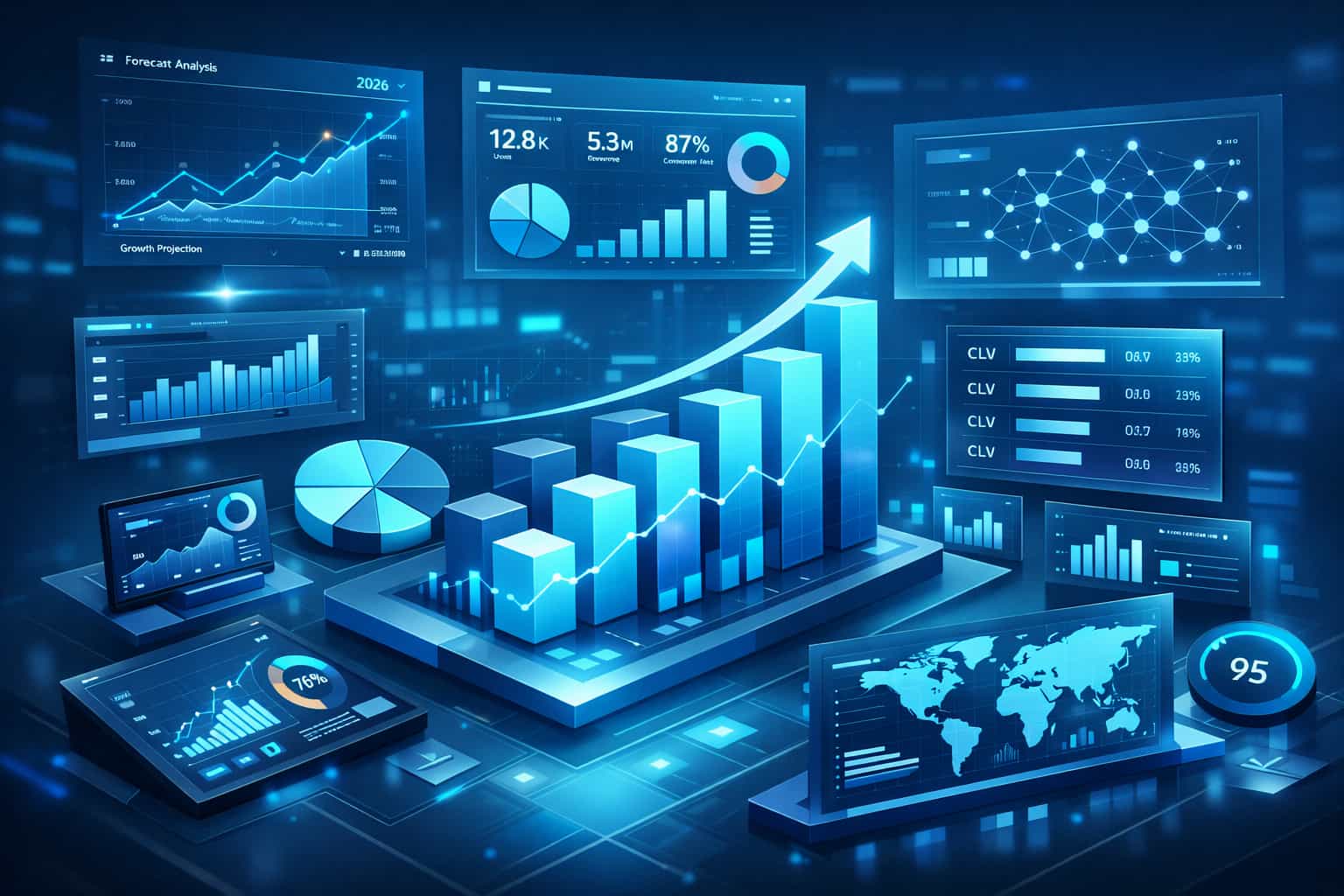
Top 10 Ways Data Analytics Can convert Your Business in 2026
Data Analytics for Business: Top 10 Ways Data Analytics Can convert Your Business in 2026
Data analytics for business is now one of the most powerful drivers of growth, efficiency, and competitive advantage. In 2026, companies that fail to use data analytics will fall behind, while those who embrace it will gain smarter decision-making power, higher customer satisfaction, and stronger profitability. From predicting consumer behavior to optimizing marketing and reducing operational costs, data analytics for business reshapes how modern companies operate.
Whether you run an online store, digital agency, service business, or enterprise, data analytics for business helps you understand customer behavior, identify growth opportunities, and make confident decisions based on facts — not assumptions. Below, we explore the top 10 ways data analytics for business will transform your company in 2026.
1. Data Analytics for Business Improves Predictive Decision-Making
Predictive analytics forms the backbone of modern decision-making. Using historical data, machine learning, and forecasting models, data analytics for business helps companies anticipate future trends.
Key Benefits:
- Predict consumer behavior
- Forecast revenue and sales
- Identify market opportunities
- Detect early warning signs
- Plan inventory and staffing
For example, Retailers use predictive analytics to determine future demand, helping them avoid overstocking and understocking.
2. Data Analytics for Business Enables Hyper-Personalized Customer Experiences
In 2026, personalization is no longer optional — it’s expected. Customers interact with brands that understand their needs and offer personalized experiences. Personalization is essential in 2026, and data analytics for business makes personalization effortless and accurate.
With data analytics, businesses can personalize:
- Product recommendations
- Customized email campaigns
- Personalized pricing
- Targeted offers
- Tailored website experiences
Why It Matters:
Customers stay loyal to brands that understand their needs. Data-driven personalization increases conversions, trust, and lifetime value.
3. Data Analytics for Business Optimizes Marketing Performance
Marketing becomes far more effective when guided by real data instead of assumptions. Data analytics for business helps teams track every marketing activity and improves ROI.
Analytics Improves:
- Click-through rates
- Conversion rates
- ROI on ad spend
- Customer segmentation
- Lead generation quality
Businesses use A/B testing and audience segmentation to create campaigns that deliver maximum results.
4. Data Analytics for Business Reduces Operational Costs
Businesses unknowingly lose money through inefficient processes, resource mismanagement, or outdated systems. Data analytics helps identify inefficiencies and reduce operational costs. Every business faces hidden costs. With data analytics for business, companies can analyze processes and detect inefficiencies early.
Common Areas Where Data Analytics Improves Efficiency:
- Supply chain delays
- Inventory mismanagement
- Workforce productivity
- Time-consuming tasks
- Machine or system failures
When businesses optimize operations, they experience reduced expenses, faster processes, and improved customer service. Data helps you operate smarter and leaner.
5. Stronger Risk Management and Fraud Detection
Risk is unavoidable in any business, but data analytics helps minimize it significantly. Companies use analytics to detect early signs of threats or suspicious activities.
Data Analytics Helps Identify:
- Fraudulent transactions
- Cybersecurity risks
- Unexpected financial losses
- Credit or loan risks
- Compliance issues
In industries like banking, telecom, and eCommerce, analytics tools monitor behavior in real-time and send automatic alerts when something unusual occurs. This protects your business and builds customer trust.
6. Optimized Inventory and Supply Chain Management
For product-based businesses, inventory mistakes directly affect profitability. Overstocking wastes money, while stockouts lead to missed sales.
Data Analytics Helps By:
- Predicting product demand
- Identifying slow-moving stock
- Tracking supply chain performance
- Avoiding over-purchasing
- Preventing delivery delays
Data-backed supply chain decisions lead to faster deliveries, lower storage costs, and improved customer satisfaction.
7. Boosting Revenue with Customer Lifetime Value (CLV) Analytics
Not every customer delivers the same long-term value. CLV analytics helps identify which customers are most profitable so you can focus your efforts wisely.
CLV Analytics Helps Businesses:
- Retain high-value customers
- Prioritize marketing campaigns
- Build loyalty programs
- Reduce churn
- Improve customer satisfaction
Subscription-based companies especially rely on CLV to identify when customers are likely to cancel — allowing them to take early action.
8. Faster Business Response with Real-Time Analytics
In 2026, business decisions must be fast. Real-time data analytics helps companies respond immediately rather than waiting for weekly or monthly reports.
Real-Time Analytics Helps With:
Live website traffic insights
Instant detection of issues
Real-time customer behavior analysis
Inventory updates
Quick decision-making
This kind of flexibility gives businesses a competitive advantage because they adapt faster than their competitors.
9. Staying Ahead of Competitors Through Data-Driven Innovation
Data-driven companies perform far better than those relying on assumptions. Using analytics helps businesses identify opportunities before competitors notice them.
Competitive Advantages Include:
Better pricing strategies
Faster adaptation to customer trends
Stronger product positioning
Improved marketing strategies
Better operational control
Data allows you to innovate continuously, stay relevant, and maintain dominance in your market.
10. Smarter Product Development with User Insights
Developing a new product is expensive. Data analytics eliminates guesswork by showing exactly what customers want.
Product Insights You Can Learn:
Which features users love
Common complaints and pain points
Customer behavior patterns
Usage analytics
Feature success rates
This leads to products that fit the market better and faster — improving user satisfaction and increasing sales.
Bonus: Why Data Analytics Will Dominate 2030
By 2030, every major industry will run on automation and AI-driven decisions. Businesses that adopt analytics early will be miles ahead. Some key predictions:
AI-powered analytics will eliminate manual data processing
Hyper-personalization will become the norm
- Real-time customer behavior tracking will be standard
- Businesses without analytics will lose competitive ground
The earlier you integrate data analytics, the faster your business grows.
Conclusion
Data analytics is not just a trend — it’s the backbone of modern business success. From improving marketing performance to predicting customer needs and optimizing operations, analytics empowers businesses to make accurate, confident, and strategic decisions.
Companies that adopt data analytics for business in 2026 will outperform competitors, generate higher profits, reduce risks, and stay future-ready. Now is the perfect time to integrate data analytics tools into your business and unlock the true potential of your data.
To see how eDigiData can help you grow using analytics, explore our
digital automation solutions or
contact us today.
According to a detailed study by Gartner, predictive analytics will drive over 70% of business decisions by 2030.
Read Gartner’s predictive analytics insights.
HubSpot also highlights how data-driven marketing can improve conversion rates significantly.
See HubSpot’s guide on data-driven marketing.
Google explains how real-time analytics helps businesses respond instantly to user behavior.
Learn more about real-time analytics from Google.
FAQs
1. What is data analytics for business?
It is the process of analyzing business data to improve decisions, efficiency, customer satisfaction, and overall growth.
2. How does data analytics for business increase revenue?
It identifies profitable customers, optimizes marketing, reduces waste, and improves customer retention.
3. Is data analytics necessary in 2026?
Yes. Businesses using data analytics grow significantly faster than those relying on guesswork.
4. Which industries use data analytics for business?
E-commerce, finance, healthcare, education, real estate, IT, manufacturing, and service industries.
5. What tools help with data analytics for business?
Google Analytics 4, Power BI, Tableau, Looker Studio, CRM analytics tools.




0 comments